Study guides for college exams sets the stage for this enthralling narrative, offering readers a glimpse into a story that is rich in detail with entertaining interactive style and brimming with originality from the outset.
Are you ready to dive into the world of study guides and revolutionize your exam preparation? Let’s explore the ins and outs of creating effective study tools for academic success!
Study guides for college exams
Study guides play a crucial role in helping students prepare effectively for college exams. They provide a structured way to review and consolidate key information, concepts, and skills needed to succeed in exams.
Importance of study guides
- Study guides help organize study material in a concise and easy-to-understand format.
- They serve as a roadmap for students, outlining what topics to focus on and prioritize during exam preparation.
- Using study guides can boost confidence by ensuring that all important information is covered before the exam.
Tips for creating effective study guides
- Summarize key points and concepts in your own words to aid in better understanding and retention.
- Use visual aids such as diagrams, charts, and mnemonics to make the information more engaging and memorable.
- Include practice questions and quizzes to test your understanding and reinforce learning.
Benefits of using study guides
- Improved retention and understanding of course material.
- Efficient use of study time by focusing on essential information.
- Reduced stress and anxiety by providing a clear study plan and direction.
Digital study guides vs. traditional paper-based study guides
- Digital study guides offer the advantage of accessibility from anywhere with an internet connection.
- Traditional paper-based study guides can be more tactile and easier to annotate for some learners.
- Digital study guides can be easily updated and customized, while paper-based guides may be more static.
Types of study guides
College students have access to a variety of study guides to help them prepare for exams and improve their understanding of course material. These study guides can vary in format, content, and focus, catering to different learning styles and preferences.
Comprehensive vs. Topic-Specific Study Guides
Comprehensive study guides aim to cover all the material for a particular course or exam, providing a broad overview of the subject matter. These guides often include summaries, key concepts, practice questions, and additional resources to help students grasp the content comprehensively. On the other hand, topic-specific study guides focus on a particular aspect or topic within a course, delving deeper into specific areas to help students master challenging concepts or topics.
Visual Study Guides
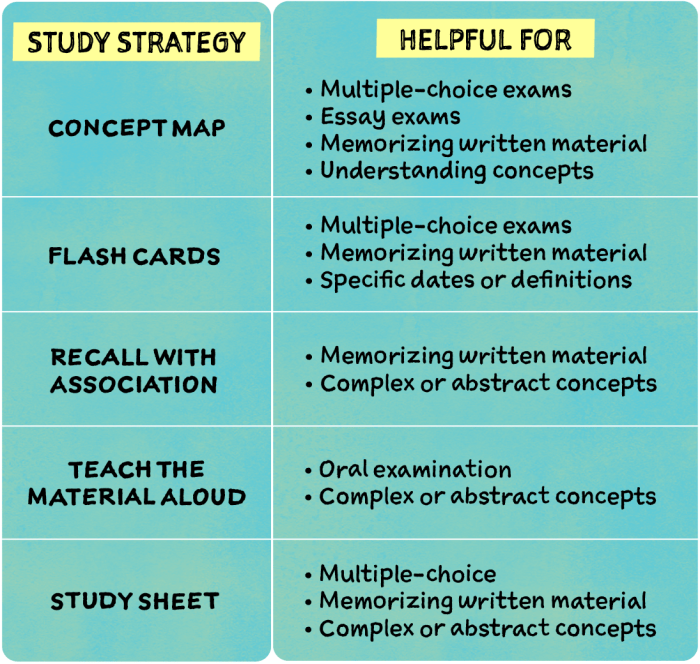
Visual study guides, such as mind maps, charts, and diagrams, are effective tools for visual learners as they present information in a graphical format. Mind maps can help students organize and connect ideas, charts can illustrate relationships and comparisons between different concepts, and diagrams can simplify complex information into visual representations. These visual aids can enhance understanding, retention, and recall of information, making studying more engaging and effective.
Collaborative Study Guides
Collaborative study guides involve group study sessions where students work together to create study materials, such as summaries, flashcards, or practice quizzes. This collaborative approach allows students to share their knowledge, perspectives, and insights, benefiting from different learning styles and strategies. Group study sessions can promote active learning, critical thinking, and peer support, enhancing overall academic performance and exam preparation.
Utilizing study guides effectively
Effective utilization of study guides is crucial for success in college exams. By incorporating study guides into your study routine, organizing them efficiently, and using them for active recall and self-assessment, you can maximize your learning potential and improve your exam performance.
Incorporating study guides into a study routine
One strategy for incorporating study guides into your study routine is to review them regularly, starting well in advance of the exam date. By breaking down the material into manageable sections and setting aside specific study time each day, you can ensure that you cover all the necessary content.
- Set specific goals for each study session based on the study guide.
- Use the study guide to create flashcards or practice quizzes for active learning.
- Review past exams and assignments to identify areas where the study guide can help reinforce your understanding.
Organizing and structuring study guides for efficient use
Organizing your study guides in a clear and structured manner can help you navigate the material more effectively. Consider using color-coding, highlighting key points, and creating summaries or Artikels to make the information more digestible.
- Divide the study guide into sections based on topics or chapters.
- Create a study schedule that allocates time for each section of the study guide.
- Use visual aids such as charts or diagrams to reinforce complex concepts.
Designing a study plan using study guides to cover all exam material
A well-designed study plan that incorporates the study guide can help you ensure that you cover all the exam material thoroughly. Start by identifying the key topics and concepts Artikeld in the study guide and prioritize them based on your understanding and proficiency.
Remember, consistency is key when following a study plan. Make sure to stick to the schedule and adjust as needed based on your progress.
Using study guides for active recall and self-assessment
Study guides can be valuable tools for active recall, helping you test your knowledge and reinforce learning through repetition. Incorporate self-assessment activities such as practice quizzes, concept mapping, and summarization exercises to gauge your understanding and retention of the material.
- Quiz yourself using the study guide to identify areas of weakness.
- Engage in group study sessions where you can discuss and quiz each other using the study guide.
- Reflect on your progress and adjust your study strategies based on the effectiveness of using the study guide.
Education and reference

Education and training play a crucial role in academic success by providing students with the knowledge and skills needed to excel in their studies. Utilizing reference materials like textbooks, journals, and online resources further enhances the learning experience by providing additional information and perspectives on the subject matter.
Importance of Reference Materials
- Textbooks serve as foundational resources for course material, offering in-depth explanations and examples to aid comprehension.
- Journals provide current research and scholarly articles that offer new insights and perspectives on a topic.
- Online resources offer a vast array of information, including videos, interactive quizzes, and forums for discussion and collaboration.
Educational Technology
- Educational technology enhances the learning experience by providing interactive tools, simulations, and multimedia content that engage students and cater to different learning styles.
- Platforms like virtual classrooms and online learning management systems offer flexibility and accessibility, allowing students to learn at their own pace and convenience.
Traditional Classroom vs. Online Training
- Traditional classroom-based education provides face-to-face interaction with instructors and peers, fostering a sense of community and collaboration.
- Online training programs offer flexibility and convenience, allowing students to access course materials and lectures from anywhere with an internet connection.
- Both formats have their advantages and limitations, and the choice between them depends on individual learning preferences and circumstances.
Final Summary
As we wrap up our journey through the realm of study guides for college exams, remember that these tools hold the power to transform your approach to studying. Embrace the guidance they offer and watch your exam performance soar to new heights!
Clarifying Questions
How do study guides help in improving exam performance?
Study guides provide a structured approach to learning, helping students organize and retain information more effectively, leading to better exam outcomes.
What are the benefits of using digital study guides over traditional paper-based ones?
Digital study guides offer portability, interactive features, and easy access to updated content, making them a convenient choice for modern students.
How can study guides be integrated into a study routine effectively?
Study guides can be incorporated by setting aside dedicated study time, breaking down material into manageable sections, and actively engaging with the content for optimal retention.